Article
Trudeau Used the Emergencies Act on His Own People. The Courts Said He Was Wrong.
In February 2022, a prime minister turned emergency powers on a trucker protest for the first time ever. Four years later, the courts ruled against him.
Watch the 60-second video version on YouTube →
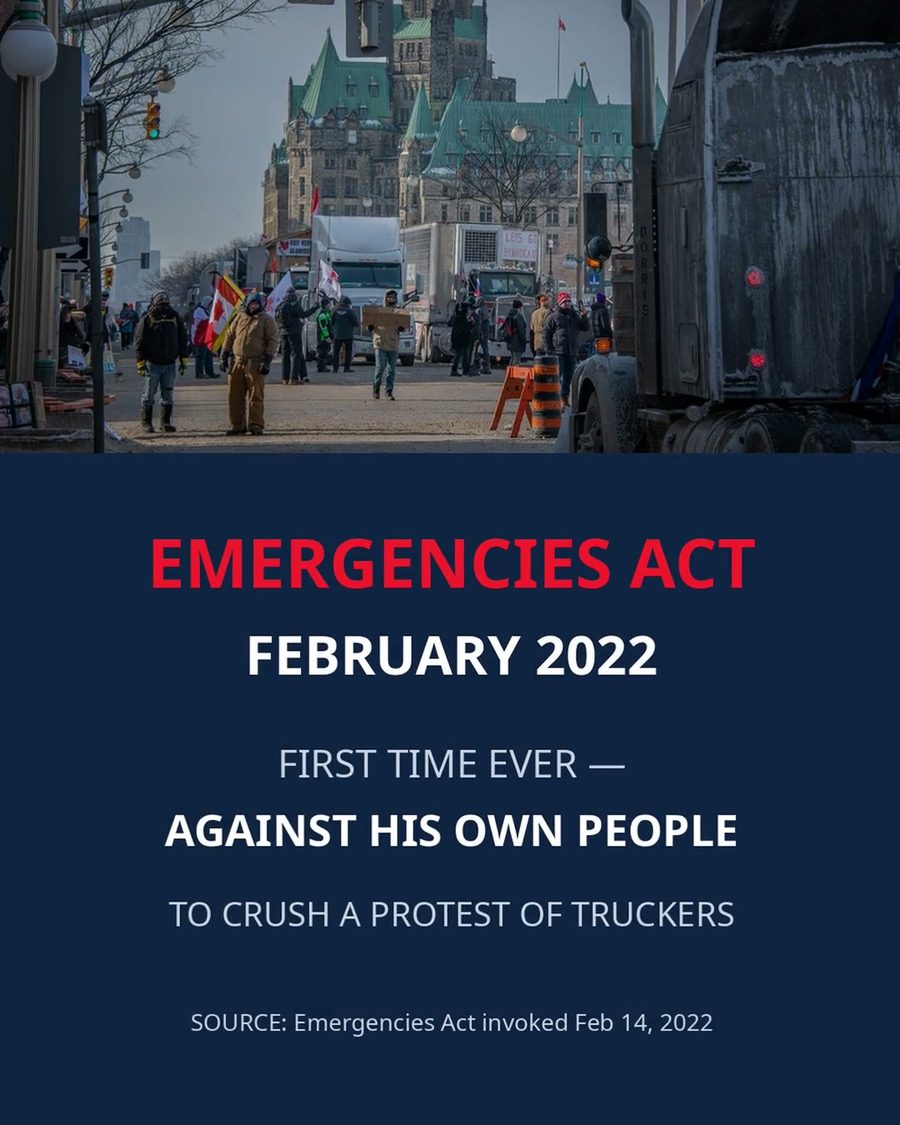
His own people. His own country. In February 2022, Justin Trudeau used the Emergencies Act against them, the first time ever, to crush a protest of truckers.
If you are planning to move to Canada, this is one of the most important stories to understand. It is about what a Canadian government can do to its own citizens in a crisis, what the courts said about it afterwards, and how the prime minister who did it fell from power. The facts below come from court records and public inquiries, not from any one side.
How it started: a mandate and a convoy
On January 15, 2022, a federal vaccine mandate took effect for cross-border truck drivers. Truckers who crossed into the United States had to be vaccinated. In late January, truckers drove to Ottawa in protest. They parked their trucks on streets in the capital and stayed for weeks. Other blockades appeared at border crossings, including the Ambassador Bridge between Windsor and Detroit, one of the busiest trade crossings in the country.
People who lived in downtown Ottawa said the noise, the diesel fumes and the blocked streets made their lives miserable for three weeks. Businesses closed. The protesters said they were standing up for freedom and for workers who had kept the country fed through the pandemic. Both of those things were true at the same time, and that is why the story is still argued about today.
February 14, 2022: the first time ever
On February 14, 2022, Trudeau's government invoked the Emergencies Act, declaring a public order emergency. The Act had been law since 1988, replacing the old War Measures Act. In 34 years, no government had ever used it. Trudeau's was the first.
The powers were wide. Police could ban public assemblies in defined areas and compel tow truck operators to clear the trucks. The day after the declaration, the government issued the Emergency Economic Measures Order. Banks, credit unions, insurers, crowdfunding platforms and payment providers were told to cut off people the government designated, and to share their private financial information, without a court order. Accounts were frozen. The powers were revoked nine days later, on February 23, 2022, after police cleared the streets of Ottawa.
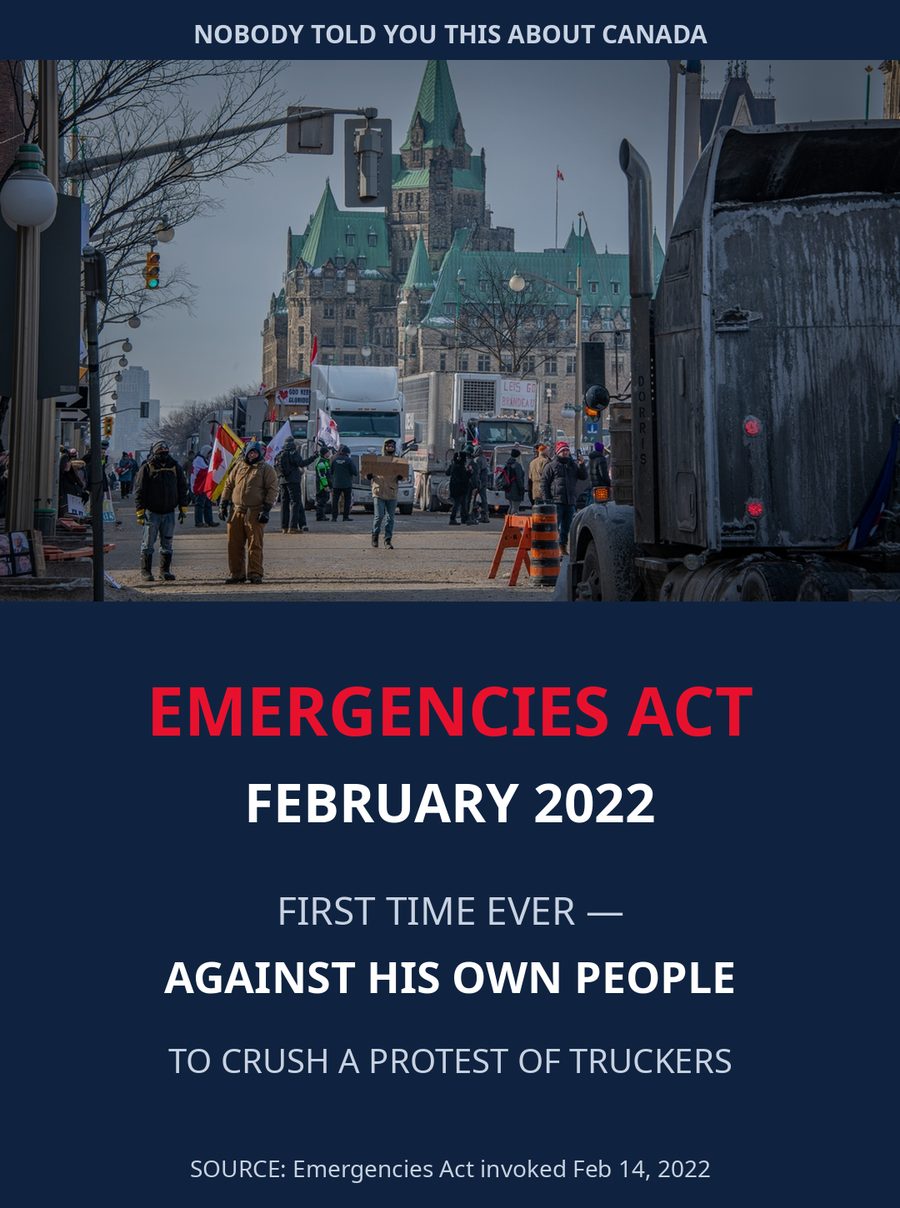
Think about what that means in plain language. A government froze the bank accounts of its own citizens for taking part in a protest, without going to a judge first. Whether you support the protest or not, that is a power worth understanding before you move your life savings into a Canadian bank.
What the inquiry and the courts decided
Canada has now had two official answers to the same question, and they disagree. A newcomer should know both.
First, the public inquiry. Justice Paul Rouleau led the Public Order Emergency Commission, which reported on February 17, 2023. He concluded that the very high threshold required for invoking the Act was met. In his view, the government was entitled to use the powers.
Then the courts looked at the same facts and reached the opposite result. On January 23, 2024, Federal Court Justice Richard Mosley ruled that the decision to invoke the Act was unreasonable and beyond the government's legal power. The Act requires a threat to national security that existing laws cannot handle, and the court found the government had not shown one. The judge also found that the measures breached the Charter of Rights and Freedoms: the assembly rules breached freedom of expression, and the financial order breached the protection against unreasonable search and seizure. Neither breach was justified.
On January 16, 2026, the Federal Court of Appeal unanimously upheld that ruling. The government appealed again, and on October 22, 2026, the Supreme Court of Canada agreed to hear the case. No hearing date has been set. Until the Supreme Court decides, the two rulings against the government stand.
That is the honest state of the record: an inquiry said yes, two courts said no, and the highest court has not ruled yet. Anyone who tells you the question is settled is selling you something.
The fall
The Emergencies Act was not the only reason Trudeau fell, but it was part of the story Canadians remembered. By late 2024, housing costs and the cost of living had been rising for years, and his own party was losing patience. On December 16, 2024, Finance Minister Chrystia Freeland resigned from cabinet hours before she was due to present the fall economic statement. On January 6, 2025, Trudeau announced he would resign as prime minister and Liberal leader once the party chose his successor.
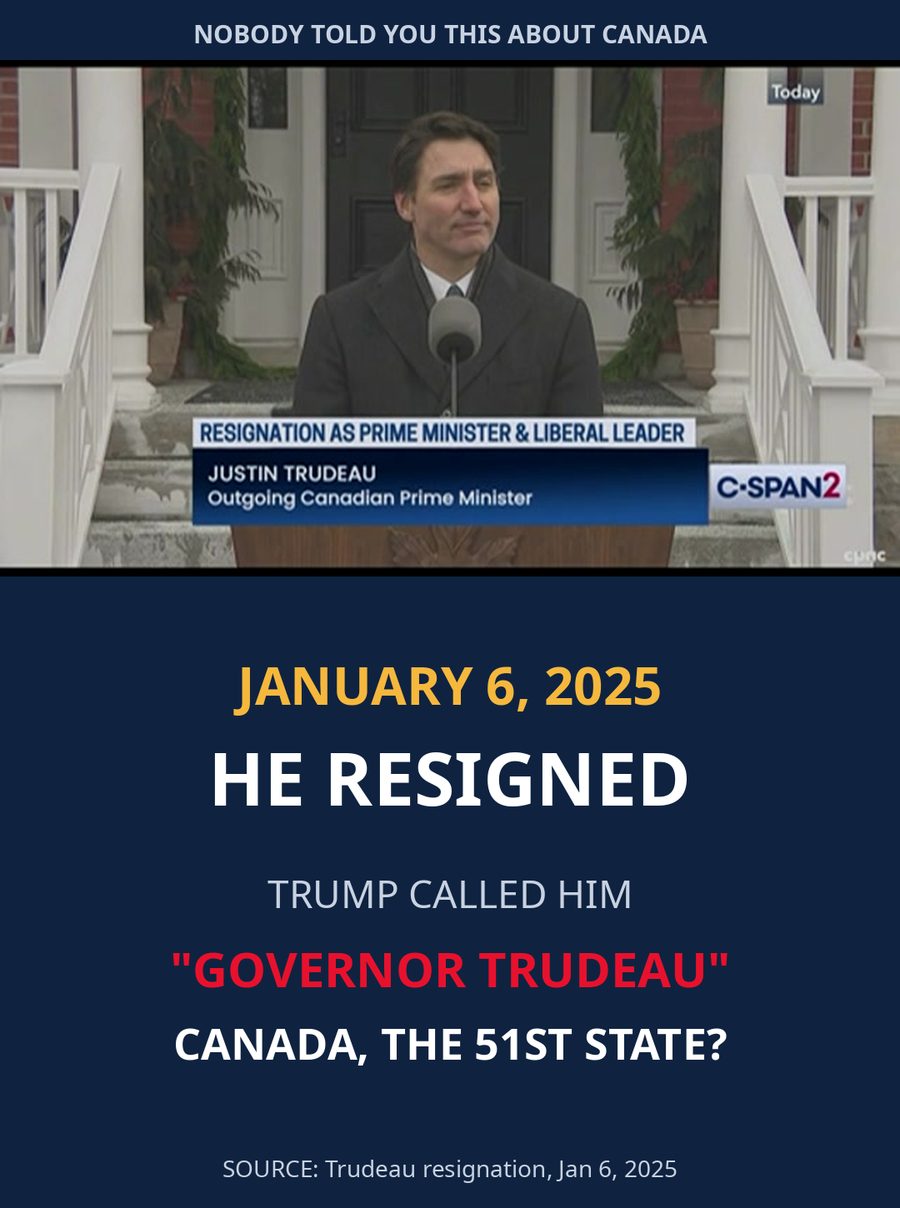
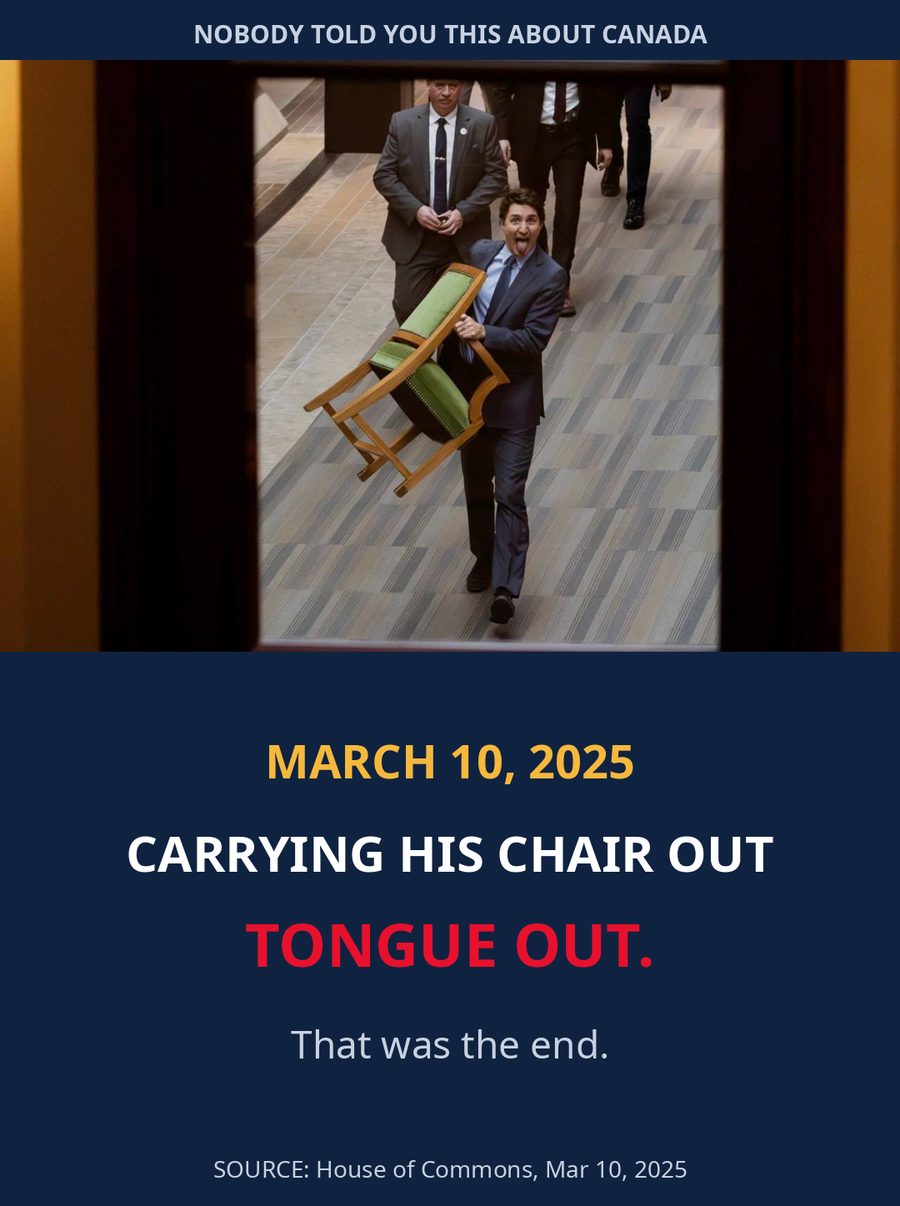
By then he had become a figure of mockery abroad. US President Donald Trump took to calling him "Governor Trudeau" and joked that Canada would become the 51st state. Elon Musk replied to Trudeau on X in January 2025: "Girl, you're not the governor of Canada anymore, so doesn't matter what you say." On March 10, 2025, Trudeau walked out of the House of Commons carrying his chair, tongue out, in a photo seen around the world. Departing MPs are allowed to take their chairs with them. That was the end of his nine years in power.
What came next
Before he left, power passed to Trudeau's own adviser. Mark Carney, who had never been elected to anything, won the Liberal leadership on March 9, 2025, and was sworn in as prime minister on March 14, 2025. He was the first prime minister in Canadian history who had never held elected office. His story has its own article.
For a newcomer, the lesson of February 2022 is not about truckers. It is about the country you are moving to. Canada has strong courts, and those courts pushed back. It also has a government that used emergency powers against a protest for the first time in the law's history, and froze bank accounts without a court order. Both facts are true. Know them both before you decide.
An inquiry said the threshold was met. Two courts said the government broke the law. The Supreme Court has not ruled yet.
What to check if this worries you
Read the Federal Court ruling (2024 FC 42) and the Federal Court of Appeal ruling (2026 FCA 6) — both are public. Follow the Supreme Court case, file 42261, Attorney General of Canada v. Canadian Civil Liberties Association. And remember that the Charter of Rights and Freedoms applies to everyone in Canada, including newcomers.
Sources
- Foundation for Freedom Online — Supreme Court to hear the Emergencies Act appeal (Oct 2026)
- Reverb256 — The inquiry, the courts and the Supreme Court: the full timeline
- Grokipedia — Emergency Measures: the 2022 invocation and the Federal Court ruling
- LatestLY / ANI — Trudeau leaves Parliament with his chair, Mar 10, 2025
- TruthBacked — Mark Carney: leadership Mar 9, 2025, sworn in Mar 14, 2025