Article
Who Is Mark Carney? The Banker Who Became Prime Minister Without Ever Being Elected
Thirteen years at Goldman Sachs. Governor of two central banks. Then prime minister of Canada, without a single Canadian ever voting for him.
Watch the 60-second video version on YouTube →
A man never elected to anything became Prime Minister of Canada. Thirteen years at Goldman Sachs. Governor of two central banks. Not one Canadian ever voted for him.
If you are thinking of moving to Canada, you should know who runs the country you are moving to. Not the slogans. The résumé. Mark Carney's career is one of the most unusual paths to power in Canadian history, and every step of it is on the public record.
Goldman Sachs: 13 years
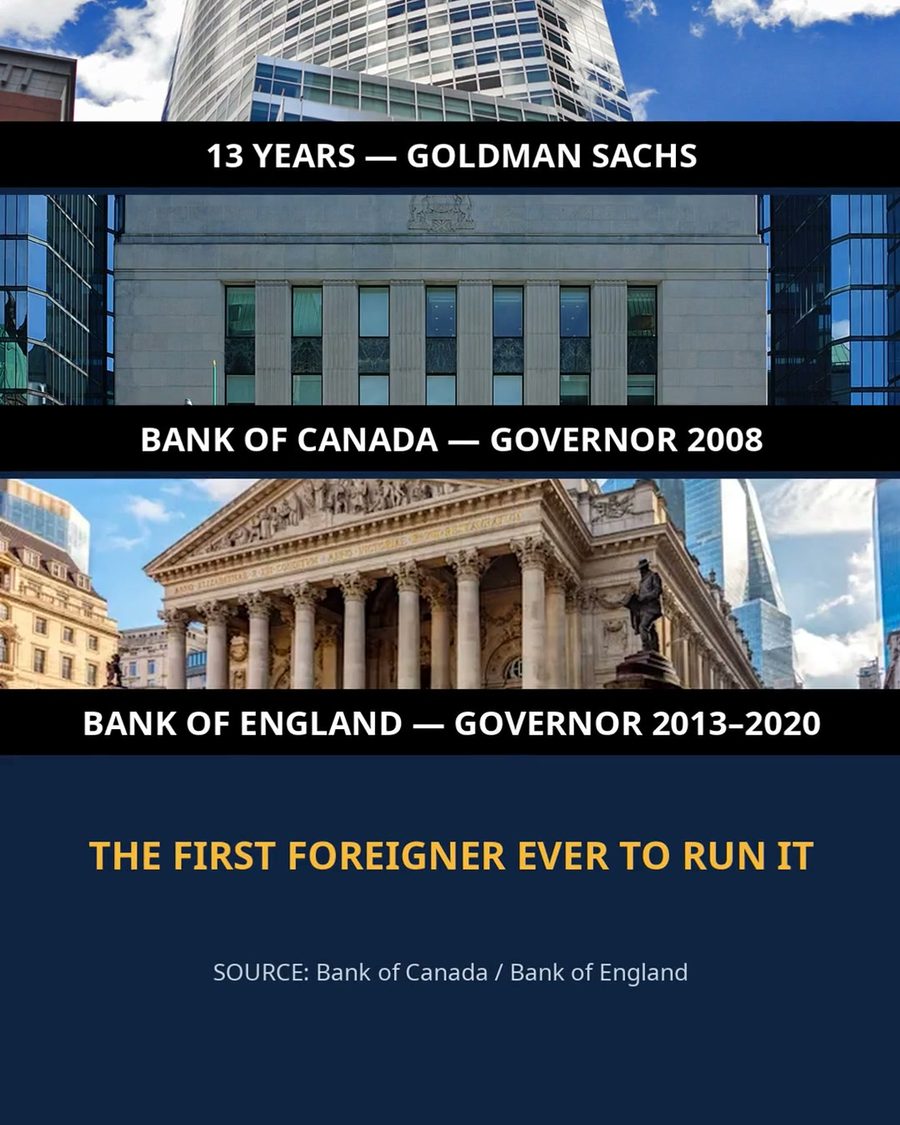
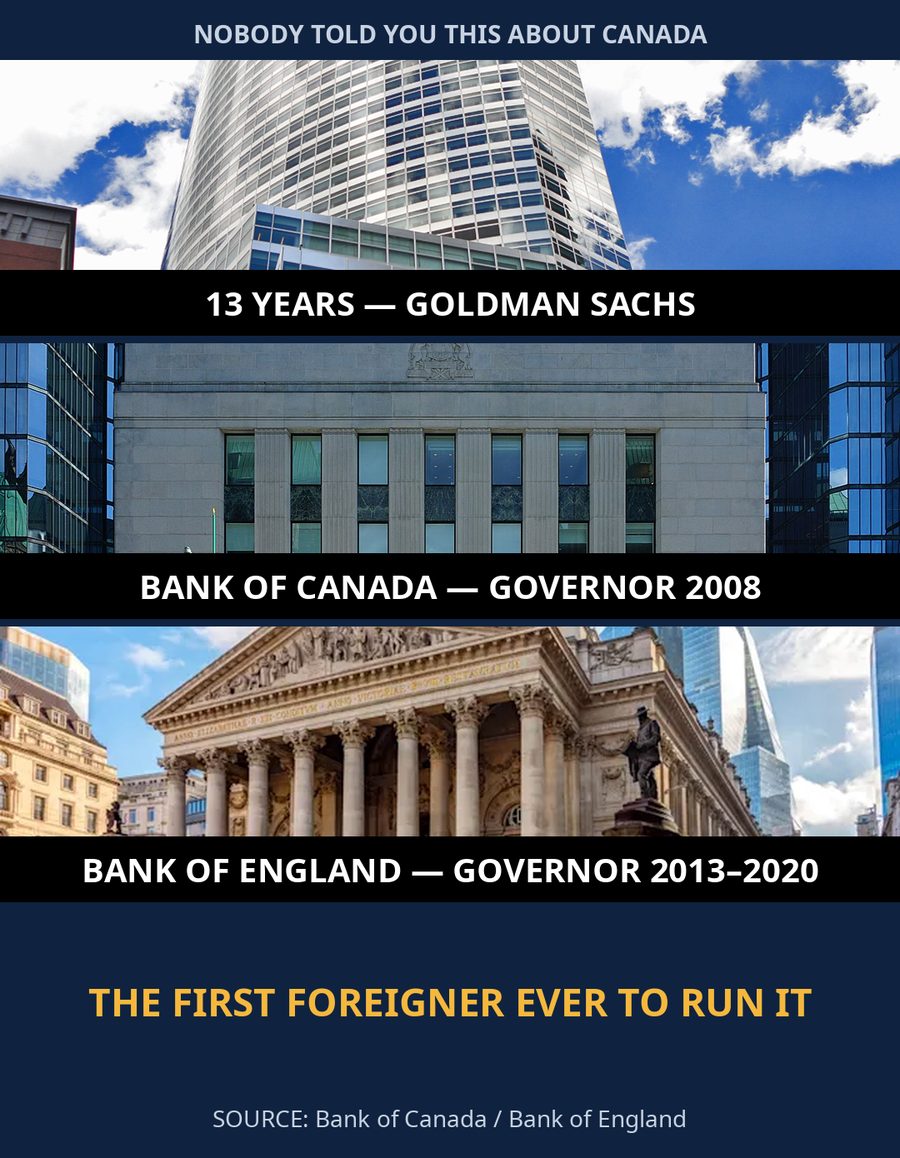
Mark Carney was born on March 16, 1965, in Fort Smith, in Canada's Northwest Territories, and raised in Edmonton, Alberta. After university, he joined the investment bank Goldman Sachs, where he worked for 13 years, in London, Tokyo, New York and Toronto, in sovereign risk and investment banking. He left in 2003 to join the Bank of Canada as a deputy governor.
That is the first thing to understand about him. Before he ever worked for the public, he worked for one of the biggest banks in the world, in four of its offices, for thirteen years.
Governor of the Bank of Canada, 2008
Carney became Governor of the Bank of Canada on February 1, 2008, at 42 years old. Within months, the global financial crisis hit. Canada came through that crisis better than most G7 countries, and Carney's early rate cuts and support for markets are widely credited as part of the reason. He served until June 2013. He also chaired the international Financial Stability Board from 2011 to 2018, the body that coordinates financial regulation across the world's biggest economies.
This is the strongest part of his record, and a fair article says so. But a résumé has more than one chapter.
Governor of the Bank of England, 2013–2020
On July 1, 2013, Carney became the 120th Governor of the Bank of England, the first non-Briton ever to run it since the Bank was founded in 1694. He held the job until March 15, 2020, leading the Bank through Brexit and the first weeks of the COVID pandemic.
His record in Britain is where the argument starts, and the numbers need care. In his own report to the UK Parliament's Treasury Committee in February 2020, Carney wrote that British business investment had risen just 1.25% since the Brexit referendum, while in the rest of the G7 it had grown 12% on average. That is his own figure, in his own report. Growth slowed through his final years there: on current data, the British economy grew 1.6% in 2018 and 1.3% in 2019, the weakest year since 2012.
Two claims from the video need correcting here, because the facts matter more than the script. The video says British growth passed 2% only twice in six years. On the data available when the video was made, that was the older picture. Current revised figures from the ONS and the World Bank show growth above 2% in four of the six years from 2014 to 2019. And the video says Carney "promised a recession" if Britain voted for Brexit. What he actually did, on May 12, 2016, was warn that a vote to leave could possibly include a technical recession. That is a warning of a risk, not a promise. The recession never came: in the first full quarter after the Leave vote, which Leave won 51.9% to 48.1%, the British economy grew 0.6%.
Brookfield, Bloomberg, the United Nations
After leaving the Bank of England, Carney moved back into finance and international institutions. From October 2020 to January 2025, he was vice-chairman and head of transition investing at Brookfield Asset Management, one of the world's largest asset managers. He took a role at Bloomberg. And from 2020 he served as the United Nations Special Envoy on Climate Action and Finance, working on moving private money into climate projects.
Bank to bank, country to country, institution to institution. That is the pattern of the career. By 2024, he had never run for any office, anywhere.
September 2024 to March 2025: six months
On September 9, 2024, Justin Trudeau named Carney as a special adviser and chair of the Liberal Party's Task Force on Economic Growth. Carney was employed by the Liberal Party, not by the Prime Minister's Office, which meant he did not have to follow the standard ethics disclosures required of prime ministerial advisers. Shortly after the appointment, it was revealed that Brookfield had asked the federal government for $10 billion as part of a $50 billion Canada-only asset fund, while Carney was advising the Liberals.
Then Trudeau resigned. Carney entered the Liberal leadership race on January 16, 2025, and on March 9, 2025, he won on the first ballot with 85.9% of the vote, winning all 343 of the party's ridings. On March 14, 2025, five days later, he was sworn in as Canada's 24th prime minister. He was the first prime minister in Canadian history who had never held elected office, and the first born in one of Canada's territories.
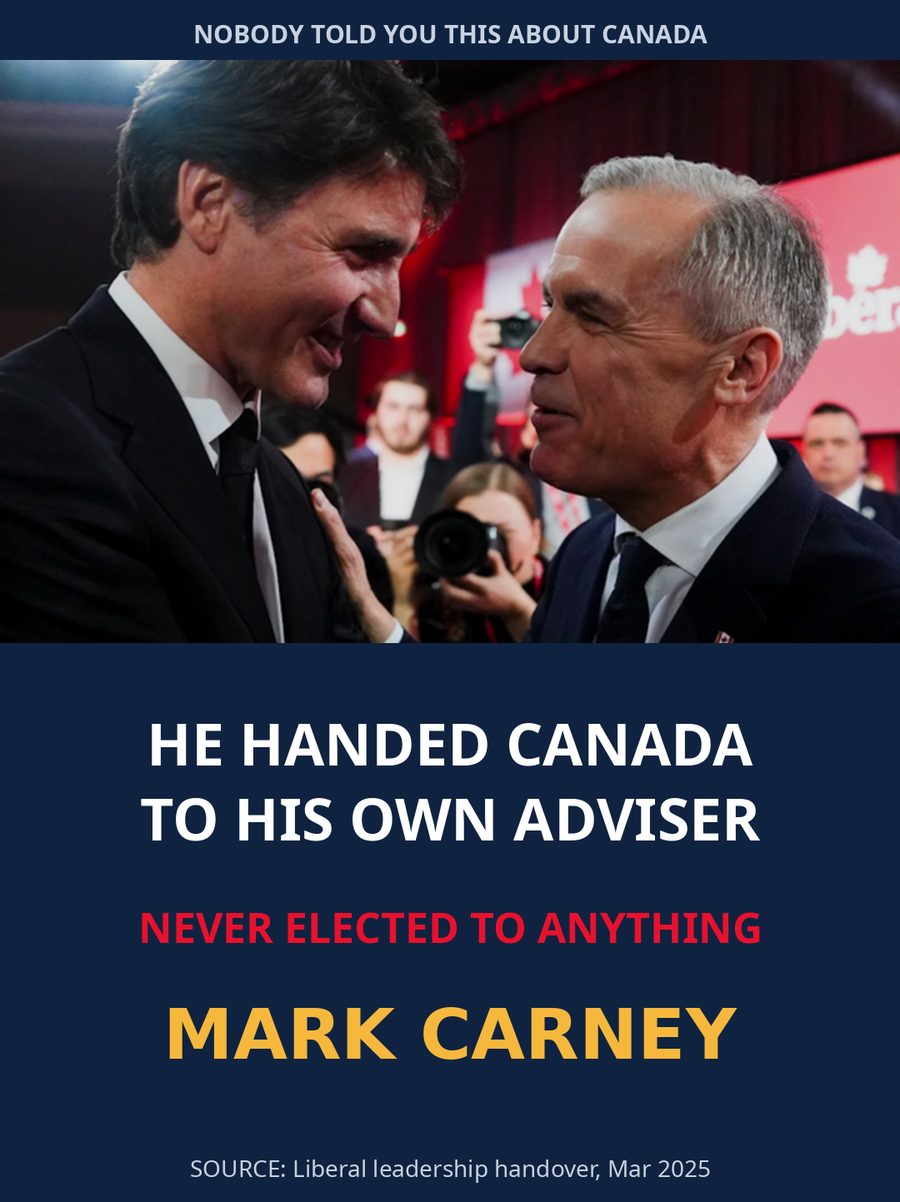
Think about the timeline. Six months from adviser to prime minister. No election. No seat in Parliament. A party vote, not a public one, chose the man who would run the country.
Then he faced the voters
Carney did not stay unelected for long. He called a general election for April 28, 2025, and led the Liberals to 169 of 343 seats with 43.76% of the vote, three short of a majority. He was elected as the member of Parliament for Nepean, Ontario. From that day on, he was a prime minister who had faced voters and won. That is also part of the record, and it matters.
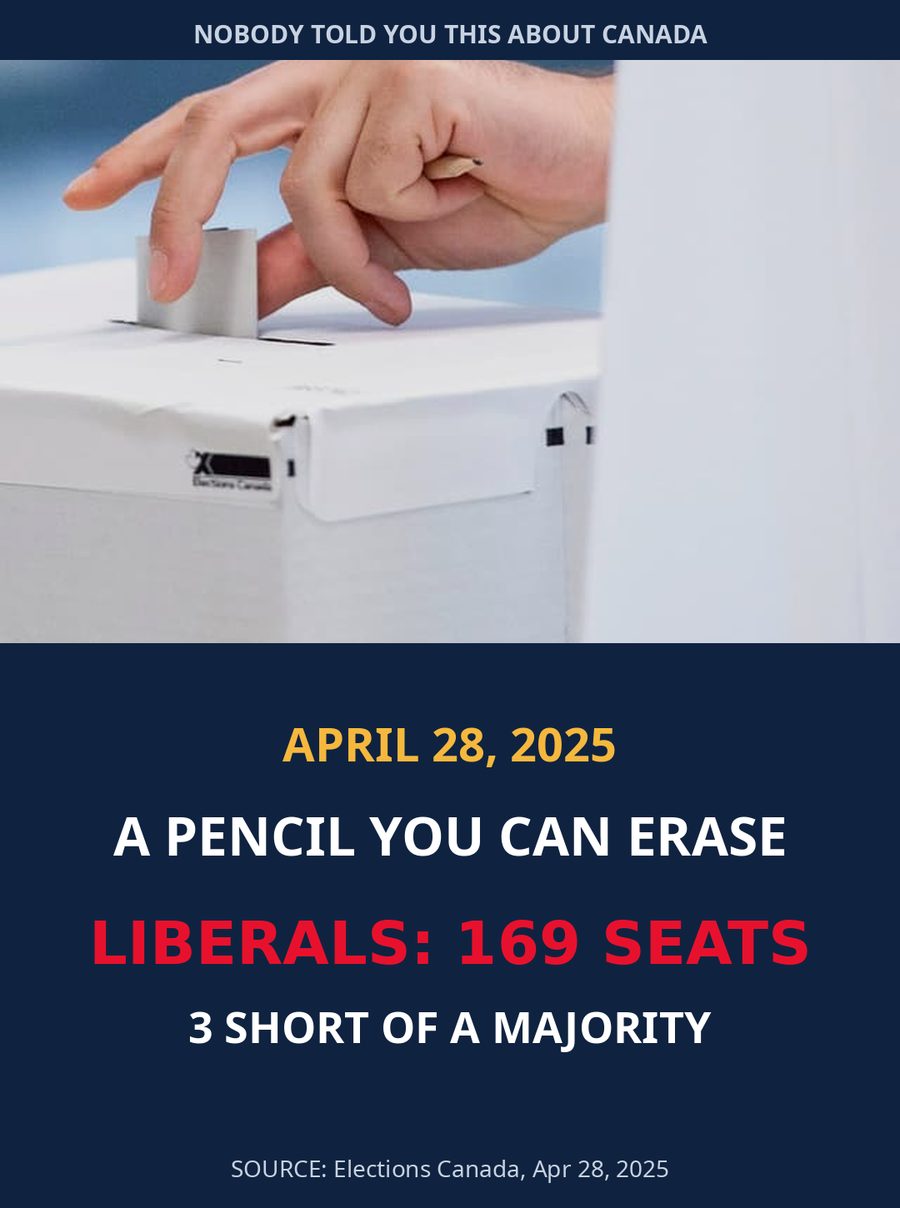
But the question the video asks still stands: how does a country end up with a prime minister who reached the top job without ever facing a voter? In Canada's parliamentary system, the answer is simple. The prime minister is the leader of the party that can command the confidence of the House of Commons. The party chooses its leader. The public votes for local members of Parliament, not directly for the prime minister. That is how the system works, and it is how a banker became prime minister. Whether you think that is a strength or a flaw is your judgement to make.
The résumé in one paragraph
Goldman Sachs, 13 years. Bank of Canada governor, 2008–2013. Bank of England governor, 2013–2020, the first foreigner ever. Financial Stability Board chair, 2011–2018. Brookfield vice-chair, Bloomberg, UN climate finance envoy. Liberal adviser, September 2024. Party leader, March 9, 2025. Prime minister, March 14, 2025. Elected MP, April 28, 2025.
Sources
- Wikipedia — Mark Carney: Goldman Sachs, Bank of Canada, Bank of England, PM Mar 14, 2025
- TruthBacked — Mark Carney: adviser Sep 2024, leadership 85.9%, sworn in Mar 14, 2025
- UK Parliament Treasury Committee — Carney's Feb 2020 report: business investment +1.25% vs G7 +12%
- Advanton / World Bank — UK annual GDP growth 2014–2019
- ONS — UK GDP, Q3 2016: growth continued after the Brexit referendum
- Sophia Initiative — Carney's May 12, 2016 Brexit warning and the referendum result
- Scotiabank Economics / Elections Canada — 2025 election: Liberals 169, Conservatives 144